
If you're trying to scale an eCommerce brand to high eight or nine figures, you’d know that ~80% of customers who purchase from you will never make a repeat sale.
The fastest-growing brands in the world have all confronted this number the same way. So instead of hoping for repeat purchases, they bake retention into their business model from the very first sale.
At Magnet Monster, most of the top-performing brands we work with are running two or three of the five strategies below simultaneously. The good news is none of these are complicated. All of them share the same underlying logic: give the customer more of what they've already shown you they want.
Here are the five.
1. What is a post-purchase bounceback offer and why does it work?
The easiest repeat sale you will ever make is selling the customer the thing they just purchased.
This is the post-purchase bounceback offer, and the logic is hard to argue with. When a customer is actively in the market and buys from you, they've told you exactly what they want. Give them more of it, immediately, at a price that makes locking in feel obvious.
For example, a customer buys a protein powder for $50. They're trying to build muscle. They'll need more of it in 30 days regardless. A bounceback offer of a second tub at $40, valid for 48 hours, is an easy yes for them and near-pure incremental LTV for you.
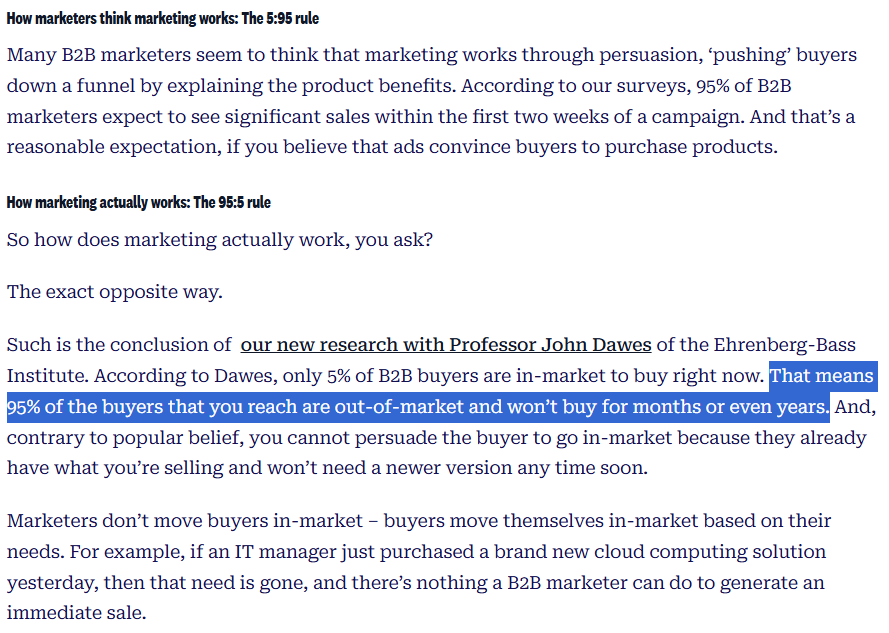
The science supports this too. The 95:5 rule from the Ehrenberg-Bass Institute tells us only around 5% of your audience is in-market at any given moment. When someone has just purchased, they are unmistakably in that 5%. Strike while the intent is hot.
This is also one of the fastest ways to improve cash flow into the business.
Don't overcomplicate cross-selling. Often the best offer is simply more of what they already wanted.
2. How does a subscription model drive repeat sales?
If you sell fast-moving consumer goods - supplements, cosmetics, anything consumed on a cycle - a subscription model bakes the repeat sale into the very first transaction.
The customer commits once and the ritual builds itself. There’s no guesswork involved, no winback campaigns, and no hoping they remember you in 45 days.
A subscriber has an LTV of roughly two to three times a one-time purchaser. That number alone justifies making Subscribe & Save the default option in your buy box.
Read: How to Email Active Subscribers to Grow LTV for DTC Subscription Brands
One important caveat: don't eliminate one-time purchase altogether.
Every eCommerce category has a high proportion of light category buyers. Plenty of customers want to experience the product once before committing, and forcing them into a subscription they don't want yet costs you the first sale entirely.
Push subscription as the default. Keep one-time purchase available. Get as many people as possible onto the plan from order one.
Read: Why Your eCommerce Subscription Revenue Has Plateaued (And What To Do About It)
3. Why is email alone not enough to drive repeat purchases?
Here's something that should genuinely worry you.
If your retention strategy is built solely on email - which describes 80 to 90% of the brands that come to us for audits - you've lost the ability to communicate with half your customers from day one.
Around 50% of customers will never open your emails. It's natural channel behaviour and it gets worse 30 to 60 days into the customer lifecycle, exactly when the repeat purchase window matters most.
Read: Should DTC Brands Add WhatsApp to Their Retention Stack?
The fix is layering SMS, direct mail, and WhatsApp (especially if you're in the EU or UK) into the journey from the customer's very first interaction.
That means:
- Collecting consent aggressively from the first purchase
- Adding these touchpoints into your existing post-purchase flows, winbacks and campaigns
- Segmenting around which channel each customer actually engages on
Bottom line: Add additional touchpoints where email already exists, and reach the customers email was never going to reach.
Read: WhatsApp for Shopify: How to Launch Faster and Make It Convert
4. How do new product drops increase repeat purchase rates?
Novelty is one of the most powerful and most overlooked drivers of repeat sales.
Brands spend enormous sums on R&D trying to create entirely new products, when the easiest repeat sale often comes from a new flavour of a bestseller or a refreshed formulation of something customers already love.
Customers who love your product like to experiment so give them a reason to do just that.
If your catalogue supports variety - flavours, colourways, seasonal editions - get into a production rhythm that lets you drop something new on a schedule. Then build the marketing machine around it:
- Anticipation campaigns before the drop
- Limited edition runs with genuine scarcity
- Early access for your best customers
Look at your existing catalogue before you invent new strategies. Sometimes the repeat sale is already sitting in your product range waiting for a new label.
5. Does giving away free product increase customer LTV?
This one sounds unconventional until you look at what you're paying Meta and Google per acquisition.
Take a segment of your best customers and give them a complementary product for free. Not a sample sachet. The actual product, added to their next order.
Using the supplement example: a customer subscribed to your protein powder gets a complimentary creatine or vitamin D3. Low cost to produce, high perceived value, and it slots directly into a stack they've already built.
Two things happen:
- The customer experiences a product they may never have bought cold, and sees the results firsthand.
- Secondly, the generosity itself drives reciprocity - customers who receive genuine value tend to give it back in repeat purchases.
We spend so much time engineering the perfect cross-sell incentive when the product itself is the best salesperson you have. Let it do the talking.
Run holdout tests to measure the influence on LTV. In our experience, this play consistently earns its cost back and then some.
The common thread
Every one of the above strategies is a version of the same principle: give the customer more of what they've already demonstrated intent to buy, and remove the friction between that intent and the next purchase.
The fastest-growing brands in the world are running multiple in tandem, from the customer's very first interaction.
Start with the one that fits your product category best. Then layer on the next.
P.S - The 80% never-repurchase statistic isn't a reason to despair. It's the clearest possible argument for why retention has to be designed into the first sale rather than bolted on afterwards. The brands that internalise this early are the ones that scale.
FAQs
What is a post-purchase bounceback offer?
A bounceback offer is a time-limited deal presented immediately after a customer's first purchase, offering more of the same product at a reduced price - for example, a second tub of protein powder at $40 within 48 hours of buying the first at $50. It works because the customer has just demonstrated they are actively in the market, making it the single highest-probability moment to secure a repeat sale.
Why should subscription be the default option in the buy box?
Subscribers have a lifetime value roughly two to three times higher than one-time purchasers. Making Subscribe & Save the default selection reduces the friction of choosing it and bakes the repeat purchase into the first transaction. One-time purchase should remain available for light category buyers who want to try before committing, but the subscription should be the path of least resistance.
Why is email alone not enough for a retention strategy?
Around 50% of customers will never open your emails, and engagement declines further 30 to 60 days after purchase - precisely when the repeat purchase window matters most. Layering SMS, direct mail, and WhatsApp into existing flows reaches the customers email cannot, without requiring an entirely new strategy.
How do new product drops drive repeat sales?
Novelty gives existing customers a fresh reason to buy without requiring genuine product innovation. A new flavour of a bestseller or an upgraded formulation is often enough. Brands that systemise drops - with anticipation campaigns, limited editions and early access for best customers - turn novelty into a repeatable revenue rhythm rather than a one-off spike.
Does giving away free product actually improve LTV?
When targeted at your best customers with a complementary product, yes. The customer experiences a product they may never have bought cold, and reciprocity drives repeat purchases. The cost is trivial next to paid acquisition, and holdout testing lets you measure the LTV impact directly rather than taking it on faith.

.svg)


1.png)
.png)