
Half your subscribers never open a single email you send them.
I've made that argument before, on PostPilot's own blog, because it's true regardless of whose platform is doing the mailing.
What I didn't get into over there is where this fits for a subscription business specifically, or what to do about it beyond "add direct mail."
Let's look into that part here.
A version of this argument first ran as a co-marketing piece with PostPilot. This is the expanded version, written for the subscription brands we work with directly.
---------------------
Half your subscribers never open a single email you send them.
I've made that argument before, on PostPilot's own blog, because it's true regardless of whose platform is doing the mailing.
What I didn't get into over there is where this fits for a subscription business specifically, or what to do about it beyond "add direct mail." That’s what I have addressed here.
I've audited dozens of subscription brands doing 8 to 9 figures. The ones with the flattest churn curve all have one retention channel in common, and it's not the one their agency bills them for every month.
50% of subscribers churn before their second order.
That number is close to the industry benchmark for DTC subscription businesses, and if you run one, you've probably already felt it.
Most brands respond to that cliff the same way: Add another flow and/or rewrite the subject line and/or increase send frequency.
Here's the problem with all three of those moves: roughly half of your subscribers never meaningfully engage with email at all.
You can rebuild the best welcome flow in your category and it won't matter to the subscriber who doesn't open email in the first place.
That's a classic channel problem.
Email has a ceiling. Direct mail doesn't share it.
I want to be precise about what I'm arguing here, because it's not "email doesn't work."
Email is still the highest-ROI channel most subscription brands have, and if yours isn't running the basics well, that's the first fix, not this one.
But email has a structural limit that no amount of segmentation or design work can solve: it only works for subscribers who open their email.
On the contrary, direct mail doesn't have any limits. It lands in a physical mailbox that gets checked regardless of inbox behaviour, which is exactly why it's the channel that reaches the subscribers your flows were never going to reach in the first place.
As Drew Sanocki, Founder & Co-CEO of PostPilot says:
“After buying 3 x 8+-figure brands, I learned that, on average, 50–80% of your customer list is functionally dead to your email marketing. Yet these are people who already know and trust your brand enough to have purchased before.
So, take whatever is working in email and "echo" it through direct mail.
The other 80%? Completely unreachable through our highest-ROI digital channel. They unsubscribed. Or weren’t opening. So we added direct mail to all our digital retention strategies to reactivate hundreds of thousands of previously "dead" emails.”
Remember direct mail is not a replacement for email. Instead, it's coverage for the gap email leaves open. Here's where that gap actually shows up across the subscriber lifecycle, and what to put in it.
The four moments where a subscription business leaks revenue
1. The welcome window
Order 1 to order 2 is where most of that 50% churn happens.
The standard response is a longer welcome email sequence: product education, usage tips, a completion challenge to build the habit before the second charge lands.
That sequence works on the subscribers who open it.
A first-box mailer reinforces the same commitment physically, at the exact window where churn risk is highest, and it reaches the subscriber whether or not they've engaged with a single welcome email.
This way, we’re not leaving the highest-risk window covered by only one channel.
2. The milestone that never gets marked
Making a reward visible to a subscriber, a gift at order two, a perk at order three, is one of the more effective churn-reduction tactics in email. It also depends entirely on the subscriber opening the email that tells them about it.
Portland Leather Goods runs an automated birthday-triggered postcard. One flow generates hundreds of thousands of dollars a month at 15x+ ROI (PostPilot, Automated Customer Retention).
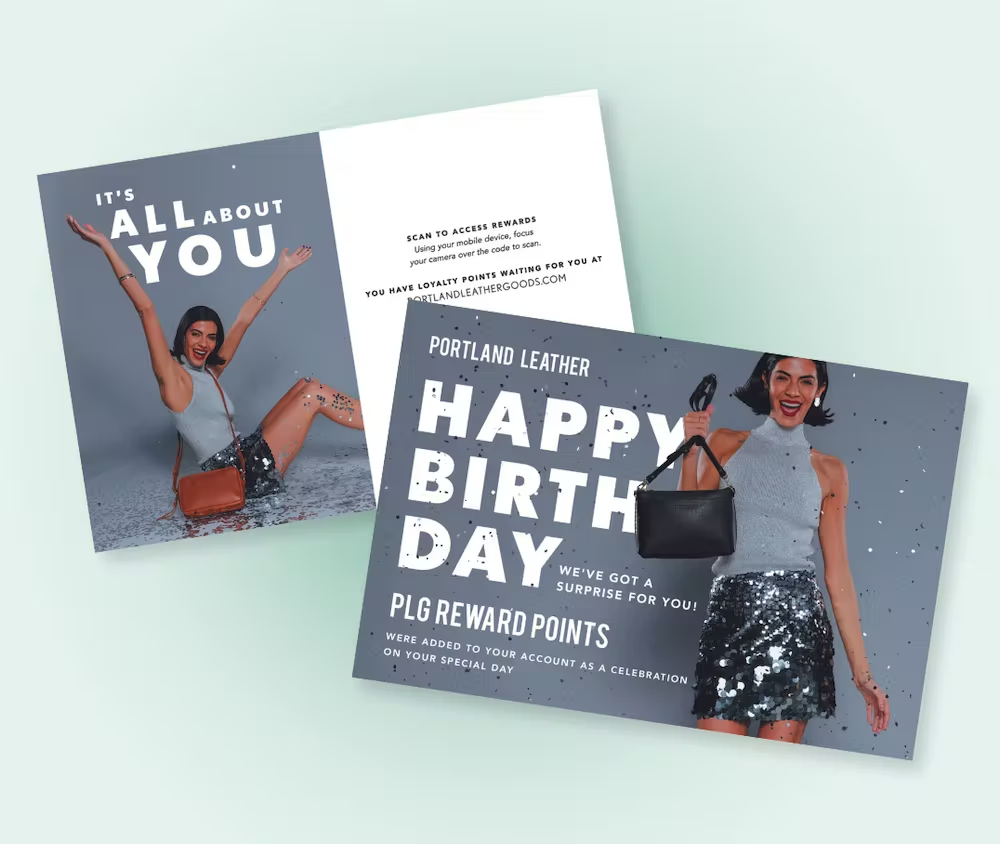
That's the same mechanic as an order-milestone mailer: a reward, triggered automatically, that arrives whether the subscriber has been opening your emails or not. Nobody misses a physical reward showing up in the mail but plenty of people miss an email about one.
Read: Direct Mail for ecommerce retention: The Exact Playbook We Run at Magnet Monster
3. Win-back, before it's a cancellation
Taylor Stitch runs automated postcards targeting customers with two or more purchases who've gone quiet for 90-plus days. Kindred Bravely does the same thing seasonally, with "we miss you" messaging that keeps running well past the initial send (PostPilot, Automated Customer Retention).
Both are aimed at exactly the segment a subscription business is most at risk of losing quietly: subscribers who've paused, gone dormant, or stopped opening anything you send.
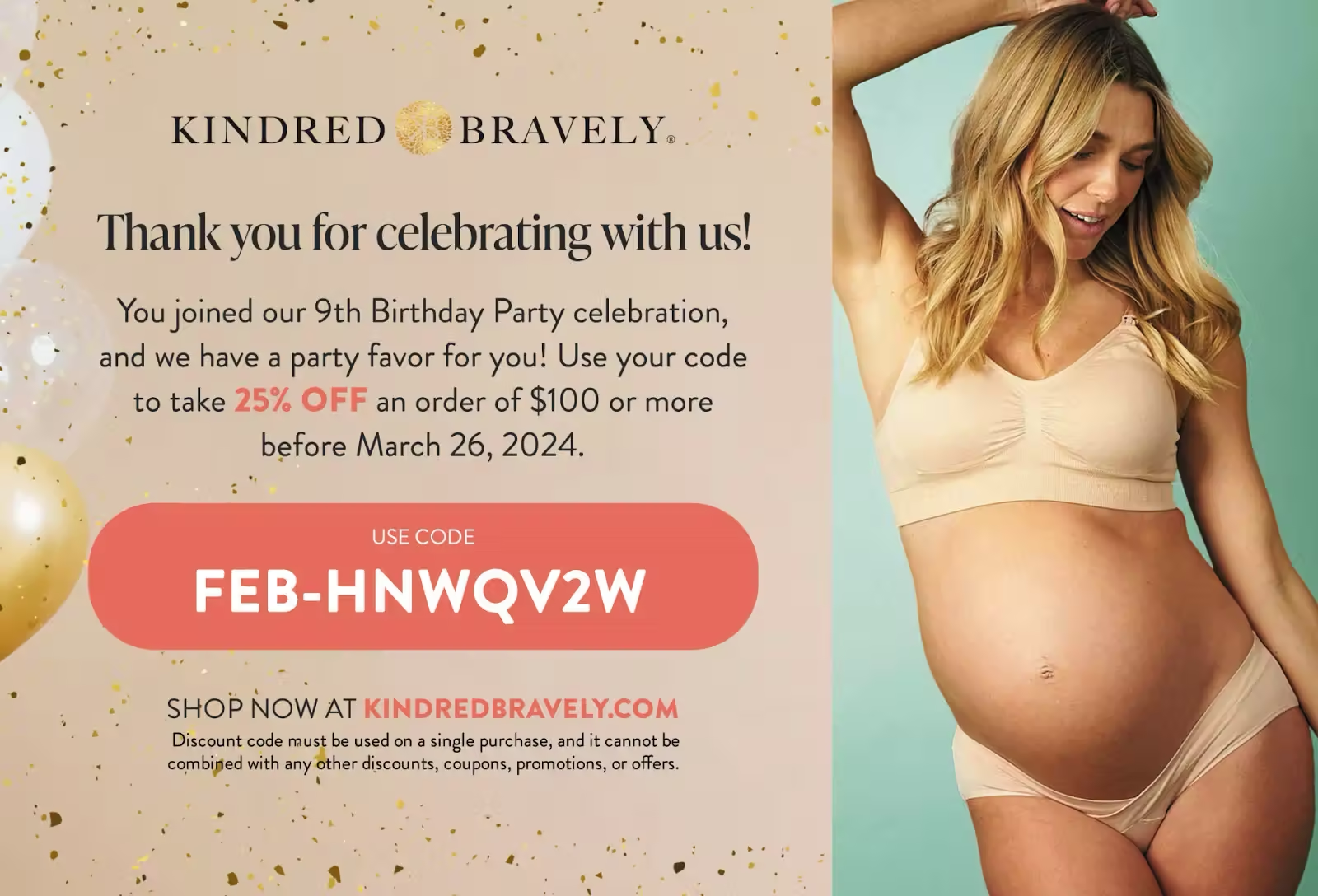
Winback direct mail works precisely because it doesn't depend on the subscriber checking an inbox they've already tuned out. It's the physical equivalent of tapping someone on the shoulder instead of leaving another message they'll never read.
I've made this argument before about winback email specifically: segment by historical order frequency and LTV, and don't waste a winback touch on a subscriber who was never going to be worth recovering. The same discipline applies here, it just travels through a different channel.
4. The renewal nobody's watching for
One collagen brand in a Zaymo-run holdout test generated more than £700,000 in annual upgrade revenue from emails sent before the first and second renewal (Magnet Monster x Zaymo, The State of Subscriber Email).
That's a genuinely large number sitting on a moment most brands leave completely silent, and it's proof the pre-renewal window is worth fighting for.
Treat it that way. A pre-renewal mailer is insurance against the one email in the sequence that actually matters getting missed, buried, or ignored.
If a £700k upside exists in the inbox, it's worth protecting with a channel that doesn't depend on the inbox at all.
Where does direct mail sit in your retention hierarchy
This is where I'd place it for anyone running our retention hierarchy framework: acquisition quality, then product and offer fit, then category purchase latency, then post-purchase experience, then remarketing touchpoints.
Direct mail at these four moments sits in that last layer, remarketing touchpoints.
It's real, and worth building, but it's downstream of everything above it.
Get subscription churn to move on acquisition quality and offer fit first, then use direct mail to catch what your best possible email programme still can't reach, not the other way round.
If you haven't mapped where your own churn actually sits in that hierarchy yet, that's the first question, before the channel one.
Read: 7 Creative Ways to Collect UGC from Customers via Email, SMS, and Direct Mail
Who gets mailed, and who doesn't
Direct mail is not a one-size-fits-all solution, and I’d urge you to be cautious if any agency approaches you with it.
In most product categories, Pareto’s law holds true: approximately half of all revenue is generated by the top 20% of buyers. This high-value audience, i.e., customers with proven order frequency and lifetime value are precisely where milestone rewards and pre-renewal mailers justify their unit cost.
Winback campaigns operate on a completely different logic. They are explicitly designed to reactivate lapsed or dormant customers, rather than target active subscribers who already engage consistently via email.
Broad, unsegmented mailings yield low efficiency and are expensive. Conversely, precise segmentation transforms direct mail into your most effective channel. A physical card tailored to a specific milestone or addressing a period of inactivity commands attention in a way digital messages often cannot.
If your retention setup currently relies on basic welcome and cancellation flows, avoid launching every lifecycle trigger simultaneously. Prioritize the win-back segment first, as it targets the most immediate pool of lost revenue.
Once win-back flows are performing predictably, you can systematically expand back toward the welcome phase.
Effective retention relies on channel alignment rather than increasing send volume on a single medium. Each critical retention window requires a touchpoint guaranteed to reach the subscriber.
For a significant portion of your audience, that critical channel isn't email.
That's exactly the kind of gap our subscription audits are built to find, where your churn actually sits, which of these four moments is costing you the most, and which channel each one actually needs.
FAQ
In what ways does direct mail boost subscriber retention?
Because a substantial portion of any audience never engages with email, direct mail bypasses inbox fatigue entirely. Deployed during key drop-off points—such as onboarding, milestone celebrations, re-engagement, and renewal windows—it addresses the retention gaps inherently left by email-focused strategies.
How can a subscription brand effectively curb churn?
First, measure churn based on order sequence rather than monthly cycles to identify true drop-off points. Next, implement interactive management tools (such as delay, skip, or swap actions) within notifications for active email readers, and layer in physical mailers to capture non-responsive subscribers during those exact lifecycle triggers.
How do you re-engage lapsed subscribers?
Categorize inactive customers using historical purchasing patterns and cumulative spend, then deploy a channel independent of inbox habits. Automated win-back postcards sent after 90+ days of silence offer a highly targeted method to re-establish connection.
How does direct mail integrate with existing digital flows?
Direct mail serves as a protective safety net rather than a digital replacement. While email and SMS handle day-to-day lifecycle communications, print touchpoints step in for high-value events and disengaged segments where digital messages fail to make an impact.
What benchmarks exist for direct mail performance?
Physical mail consistently delivers higher engagement than email, averaging around 9% response compared to 1% according to industry studies (PostPilot). Individual campaign performance depends heavily on audience targeting, offer strength, and format.
Why is direct mail relevant for modern e-commerce?
As digital channels become increasingly saturated, physical mail stands out. Modern programmatic services connect directly into platforms like Shopify and Klaviyo, allowing physical postcards to trigger seamlessly off real-time customer data alongside your automated email sequences.
Want more of this in your inbox? Subscribe to our newsletter and YouTube channel for weekly DTC retention strategies, extracted straight from the brands we work with. No fluff, just actionable plays.

.svg)





1.png)
.png)